1,2-Diphenylethane
CAS No.: 103-29-7
MF: C14H14
MW: 182.26
Synonym: Bibenzyl / Dibenzyl
Sample: Available
Packaging: 25kgs/bag
1,2-Diphenylethane serves as a key intermediate in organic synthesis. Through bromination, it produces decabromodiphenylethane, a novel flame retardant. Its sulfonated derivatives act as excellent tanning agents in leather processing. Additionally, it functions as a high-performance heat transfer fluid, replacing conventional thermal oils. It is also a crucial raw material for optical brighteners and pharmaceutical intermediates, offering broad application potential across multiple industries.
As a chemical supplier in China with years of export experience, Sprux provides high-purity 1,2-Diphenylethane that meets agreed specifications. We ensure a stable supply of 1,2-Diphenylethane, comply with quality inspection standards, and provide all necessary product and export documentation, including COA, SDS, and TDS.
| Item | Specification |
| Appearence | White powder/crystal |
| Assay | ≥99.5% |
| Low boilers | ≤0.1% |
| High boilers | ≤0.1% |
| Melting Point | ~50–53°C |
| Boiling Point | ~284°C |
| Density | ~1.01 g/cm³ |
| Water Solubility | Practically insoluble |
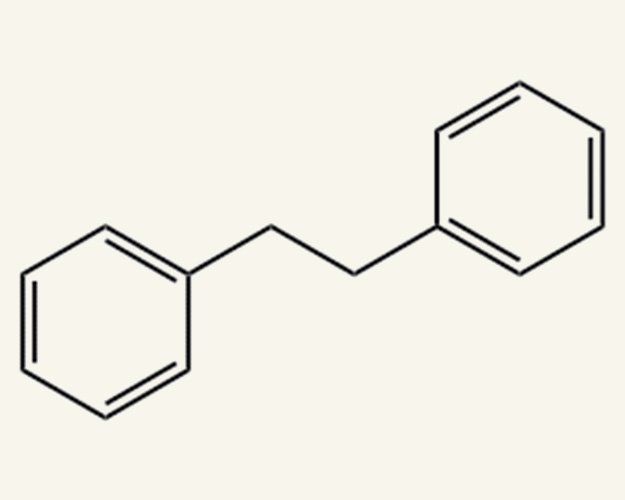
Clear Aromatic Structure
Our 1,2-Diphenylethane has a clear diphenylethane structure and is suitable for organic synthesis.
Stable Chemical Structure
Sprux’s 1,2-Diphenylethane has a stable aromatic backbone, suitable for the production of specialty chemicals.
Multiple Purity Options
The purity level can meet different synthesis and production needs.
Crystalline Solid Form
At room temperature, our 1,2-Diphenylethane usually appears as a white to off-white crystalline solid.
Low Water Solubility
Our 1,2-Diphenylethane is almost insoluble in water and compatible with specific organic solvents.
- Synthesis of Flame Retardants
Sprux 1,2-Diphenylethane (benzyl), a rigid diphenylethane skeleton, endows polymer matrices, engineering plastics, and electrical insulation materials with better thermal stability and ignition resistance.
- Leather Tanning and Processing
In the leather manufacturing industry, 1, 2-Diphenylethane (benzyl) enhances the fiber structure of leather and improves its light resistance, tensile strength, softness, and chemical resistance during chromium and chromium-free tanning processes.
- High-Temperature Heat Transfer Fluids
With excellent thermal stability, high boiling point, and low aromatic volatility, our 1,2-diphenylethane maintains outstanding oxidation stability and service life in closed-loop high-temperature industrial heating systems.
- Optical Brighteners and Fluorescent Dyes
Sprux 1,2-Diphenylethane is widely used in textiles, papermaking, detergents, and polymers, converting invisible ultraviolet light into visible blue light to greatly improve the whiteness and brightness of products.
- APIs and Fine Intermediates
1,2-Diphenylethane is a versatile intermediate used in the multi-step organic synthesis of cardiovascular drugs, anti-inflammatory drugs, and central nervous system (CNS) active molecules.
According to the order quantity and logistics requirements, 1,2-Diphenylethane can provide the following specifications:
20 Kg/Bag
Storage:
Keep in a dry, clean warehouse with good ventilation.
Avoid exposure to light and heat.
Protect the product from leakage, rain, and insolation during transportation.
As a professional B2B chemical supplier, we offer high-purity 1,2-diphenylethane with ≥ 99.5% purity (this product is almost insoluble in water), and each batch comes with a Certificate of Analysis (COA).
We will contact the factory to negotiate bulk supply with you based on the product supply situation, required specifications, and order quantity. Please inform us of your expected purchase quantity and delivery destination so that we can evaluate the supply arrangement.
Due to its low melting point (approximately 52 ° C), 1,2-diphenylethane should be stored in a cool, dry, and well-ventilated warehouse, away from direct sunlight, heat sources, and strong oxidants. The container must be kept sealed to prevent material from clumping. When handling large amounts of materials, it is essential to wear appropriate personal protective equipment (such as gloves, goggles, dust masks).